
The Coinage of Metapontum, Part 3
Chronological coverage: c. 480 BC – 323 BC
Rights status: Rights status unconfirmed (published 1990; available on Internet Archive). This work is shown for research access with a rights notice; contact us if you are a rightsholder or have better rights information. Rights & takedown
Johnston’s third part treats the coinage of Metapontum from about 480 to 323 BC through a detailed catalogue and die study supported by twenty-one plates. It is useful for distinguishing emissions, magistrate symbols, fabric and weight changes, and links among the city’s incuse and later struck series. Researchers should use its catalogue numbers and die identifications together with Parts 1–2 and subsequent published specimens, since this volume covers only one segment of the complete Metapontine sequence.
Use the catalogue and plate references precisely, but check subsequent hoards, newly recorded dies, corrected provenances, and later parts of the corpus before treating its sequence as complete.
Cite this work
Ann Johnston (1990) The Coinage of Metapontum, Part 3. Numophylacium Graecum, https://numophylacium.com/works/johnston-metapontum-3/
Research guides citing this work
- Magna Graecia A research path for Tarentum, Metapontum, Sybaris, Croton, Lucania, Bruttium, Apulia, and older Sambon or BMC Italy references. Italy · Magna Graecia · Southern Italy
- Macedonia and Alexander A guide to BMC Macedonia, AMNG Macedonia and Paeonia, Newell's Demetrius, and related references for Macedonian royal, tribal, civic, and Alexander-type coinage.
- Hoards and Findspots A guide to Noe, Newell, hoard bibliography, find evidence, and search strategies for using Greek coin hoards to answer chronology and circulation questions.
Related works
- Doctrine of Ancient Coins, vol. 1 Josef Hilarius Eckhel, 1792
- Description of Ancient Greek and Roman Medals, vol. 10 (1808) Théodore E. Mionnet, 1808
- Description of Ancient Greek and Roman Medals, vol. 1 (1829) Théodore E. Mionnet, 1829
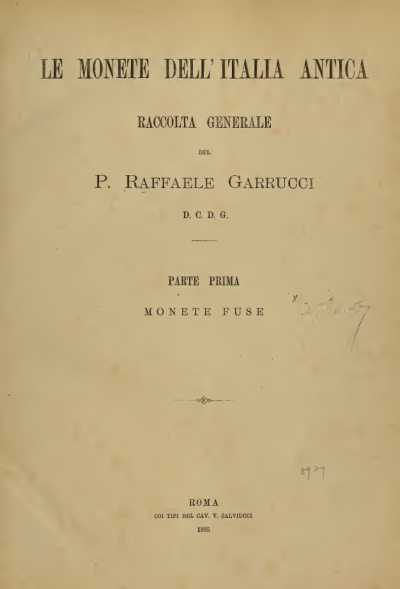
- The Coins of Ancient Italy Raffaele Garrucci, 1885
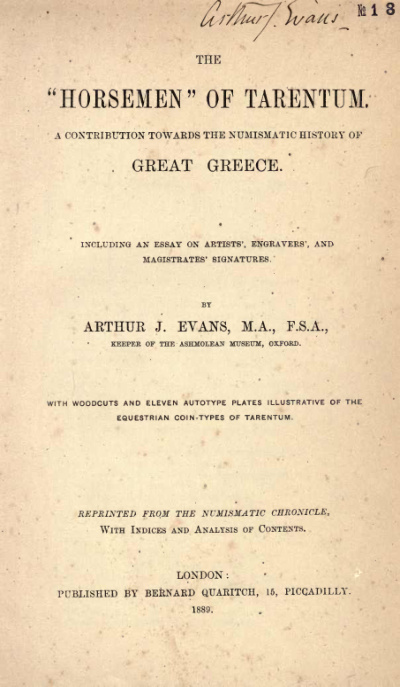
- The "Horsemen" of Tarentum Arthur J. Evans, 1889
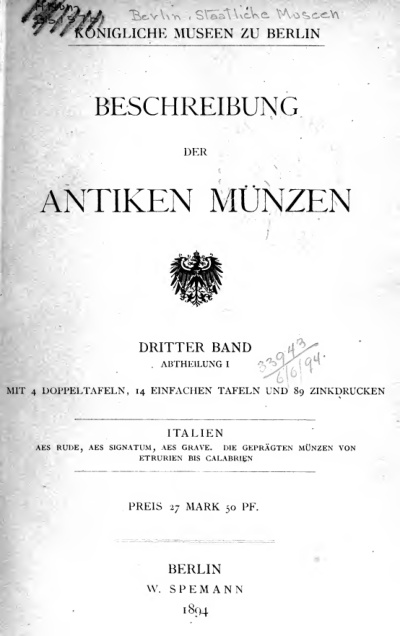
- Description of the Ancient Coins (Royal Museums, Berlin), vol. III Alfred von Sallet et al., 1894


Rights status unconfirmed — published 1990; available on Internet Archive.