AtticaἈττική
Athens, its territory and the reference works for the coinages of Attica.
Athena and the civic types
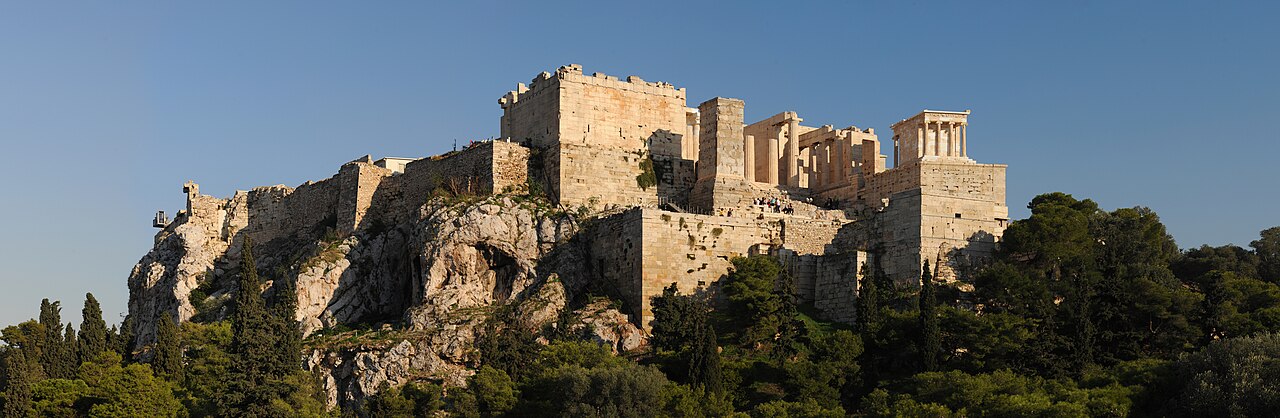
The Acropolis was a major sanctuary of Athena. The goddess’s helmeted head and an owl form the principal types of Athenian silver coinage from the late sixth century BC.1, 5
Laurion silver mines
The Laurion mining district in southeastern Attica supplied silver for the Athenian coinage. Mine-lease inscriptions document the organization of the industry and its relationship to the state.4
Circulation and imitation
Athenian tetradrachms circulated beyond Attica. Their occurrence in hoards and the production of imitations provide evidence for the international use of Athenian silver.5
Athens Ἀθῆναι →
Silver and bronze series, denomination standards, type descriptions and hoard evidence. The New Style index records 111 issue groups from Thompson’s corpus, with magistrate legends, symbols and page references.
Selected reference works
BMC Attica, Megaris and Aegina
B. V. Head · BMC Attica · 1888Specimen descriptions and catalogue references for the coinages of Attica, Megaris and Aegina.
Read in libraryTypologyFrom Wappenmünzen to Gorgoneia to Owls
John H. Kroll · 1981An analysis of the Wappenmünzen types and the role of the gorgoneion issues in the transition to owl coinage.
Source referenceChronologyThe Archaic Owls of Athens
Colin M. Kraay · 1956A reassessment of the classification and dating of the early owl series, based on the numismatic evidence and earlier scholarship.
Source referenceWorks on Attica
Dates and attributions in older catalogues may differ from those adopted in later studies.
Browse all 12 references
- Doctrine of Ancient Coins, vol. 4Read in library
- Description of Ancient Greek and Roman Medals, vol. 3 (1824)Read in library
- The Coins of AthensSource reference
- A Numismatic Commentary on PausaniasRead in library
- A Catalogue of the Greek Coins in the British Museum: Attica, Megaris, AeginaRead in library
- Common Greek Coins, Vol. IRead in library
- Treatise on Greek and Roman Coins, Part II (Historical Description), vol. IIIRead in library
- Athens: Its History and Coinage before the Persian InvasionRead in library
- The Archaic Owls of Athens: Classification and ChronologySource reference
- The Celenderis HoardSource reference
- From Wappenmünzen to Gorgoneia to OwlsSource reference
- New Specimens of Athenian Coinage, 480–449 BCSource reference
Sources & image credits
- The Acropolis and the cult of AthenaUNESCO World Heritage Centre
- Athenian silver and the tetradrachmThe Metropolitan Museum of Art
- The illustrated coin: 449–407 BCCleveland Museum of Art, 1916.992
- The leases of the Laureion minesMargaret Crosby, Hesperia 19 (1950), pp. 189–312
- The Greek Coins · Athenian Agora XXVIJohn H. Kroll, with Alan S. Walker (1993). Silver: pp. 4–15; bronze denominations: pp. 37–39.
- A Hoard of Athenian FractionsMargaret Thompson, ANS Museum Notes 7 (1957), pp. 1–11, pls. I–IV. Find and catalogue: pp. 1–5; interpretation and proposed date: pp. 6–11.
- The Reminting of Athenian Silver Coinage, 353 B.C.John H. Kroll, Hesperia 80 (2011), pp. 229–259. Folded flans: pp. 234–245; third-century coins and silver units: pp. 246–248.
- The New Style Silver Coinage of AthensMargaret Thompson, Numismatic Studies 10 (1961). Specimen corpus. The revised chronology is discussed in Kroll 1993, pp. 13–15.
Landscape photograph. Acropolis panoramic view from Areopagus hill, Ggia, 24 October 2010. CC BY-SA 3.0. Wikimedia Commons web rendition; no crop or other alteration.

Coin photographs. Cleveland Museum of Art, Gift of J. H. Wade, 1916.992.a (obverse) and 1916.992.b (reverse). CC0. Museum web renditions, unaltered. Date and measurements follow the museum record; type descriptions may also be compared with Kroll 1993, p. 17, no. 8. The museum’s 449–407 BC dating applies to this specimen; the timeline follows Kroll’s broader chronology.
Piraeus hoard illustrations. Selected figure details from Thompson 1957: the jug from pl. IV; drachms 1–2 from pl. I; triobols 60–66 and diobol 73 from pl. III; obol 80, tritartemorion 84 and hemiobol 88 from pl. IV. © American Numismatic Society. These are excerpts for discussion of the published find; no open licence is claimed. Figure boundaries are selected without retouching the objects.
Hoard coins in colour. Kroll 2011, p. 243, fig. 6c–d, and p. 246, fig. 10a. Photographs © J. H. Kroll; courtesy of the American Numismatic Society. The article’s p. 229 n. 1 provides for noncommercial image reproduction. The relevant coin illustrations are extracted from their page layouts, without retouching.