AthensἈθῆναι
The coinage of Athens, from the earliest silver to the late Hellenistic issues.
Sixth–first centuries BC. Dates and readings follow the named reference works; the Roman imperial bronze series is outside this study’s present scope.
Series and chronology
Principal phases of the coinage, with the chronological attributions adopted in the cited studies.
- c. 546–510 BC
Wappenmünzen
The earliest Athenian silver issues bear several obverse types, including wheels, amphorae and animal heads. Kroll dates this coinage to the Peisistratid tyranny. The date of its introduction is approximate.
Kroll 1993, p. 5 - Late 6th–early 5th c. BC
Early owl coinage
The helmeted head of Athena and the owl replaced the changing types of the Wappenmünzen. Olive leaves were added to Athena’s helmet on the “wreathed” issues of the 470s and 460s.
Kroll 1993, pp. 5–6 - c. 450s–404 BC
Standardized fifth-century issues
Kroll dates the beginning of the standardized tetradrachm issues to the 450s BC, revising Starr’s proposed date of 449. Emergency gold and silver-plated bronze issues belong to the late fifth century.
Kroll 1993, pp. 6–8 - 353 BC
Reminting and pi-style silver
In Kroll’s reconstruction, the state called in older silver coins for reminting after the Social War. Flattening and folding these coins produced blanks whose seams and irregular outlines remain visible on some pi-style tetradrachms.
Kroll 2011, pp. 232–245 - 4th–3rd centuries BC
Bronze and fractional silver
Bronze increasingly replaced the smaller silver denominations in circulation. Kroll concludes that Athens ceased striking silver denominations below the triobol by the end of the fourth century.
Kroll 1993, pp. 4, 37–39 - Mid-2nd–mid-1st c. BC
New Style silver coinage
The New Style issues have broad flans, with Athena on the obverse and an owl on an amphora within an olive wreath on the reverse. Names, symbols and letters record aspects of mint administration. Kroll dates the full New Style to c. 165 BC; Thompson’s corpus catalogues the specimens.
Kroll 1993, pp. 13–15; Thompson 1961
Dates follow the cited studies and are approximate where indicated. Thompson’s New Style corpus provides the specimen catalogue; Kroll discusses subsequent revisions to its chronology.
Metals, denominations, and standards
Silver values and bronze modules. A denomination’s theoretical weight is distinct from the measured weight of a surviving specimen.
The Attic silver standard
1 drachm = 6 obols
Selected units attested in different Athenian series; these were not all struck together. The chart includes the later pentobols and tetrobols and the very small fourth-century fractions.
| Denomination | Obols | Grams* |
|---|---|---|
| Tetradrachm | 24 | 17.28 |
| Didrachm | 12 | 8.64 |
| Drachm | 6 | 4.32 |
| Pentobol | 5 | 3.60 |
| Tetrobol | 4 | 2.88 |
| Triobol / hemidrachm | 3 | 2.16 |
| Diobol | 2 | 1.44 |
| Trihemiobol | 1½ | 1.08 |
| Obol | 1 | 0.72 |
| Tritartemorion | ¾ | 0.54 |
| Hemiobol | ½ | 0.36 |
| Tetartemorion | ¼ | 0.18 |
| Hemitetartemorion | ⅛ | 0.09 |
*Calculated at 4.32 g to the drachm (0.72 g to the obol), rounded to 0.01 g. Bar lengths express value, not diameter. The 0.09 g eighth-obol entry is a theoretical proportion, not a specimen measurement.
Standard: Kroll 2011, pp. 246–248. Attested denominations: Kroll 1993, pp. 16–23, 26; the attribution of the two-owl fraction on p. 19 is disputed.
Types, legends, and varieties
Obverse and reverse descriptions, ethnic legends, magistrate inscriptions and subsidiary devices. The catalogue below contains 51 type descriptions and the 111 entries in Thompson’s New Style sequence.
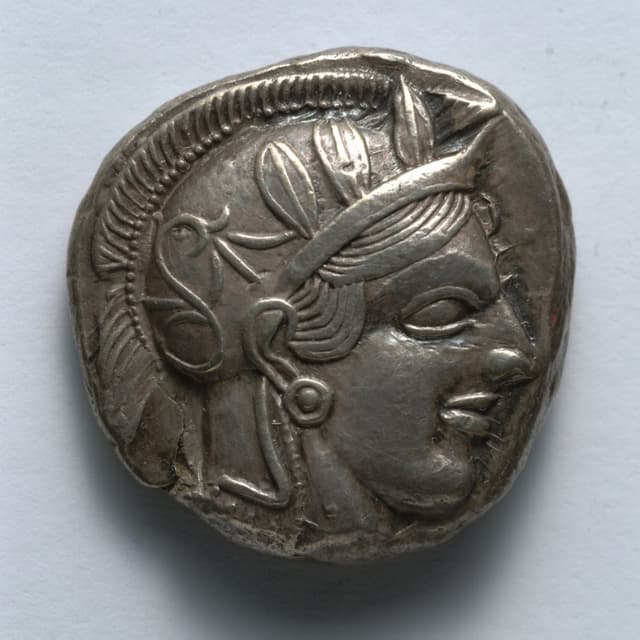
Athenian silver tetradrachm
Silver tetradrachm · 449–407 BC
Athens · Cleveland Museum of Art
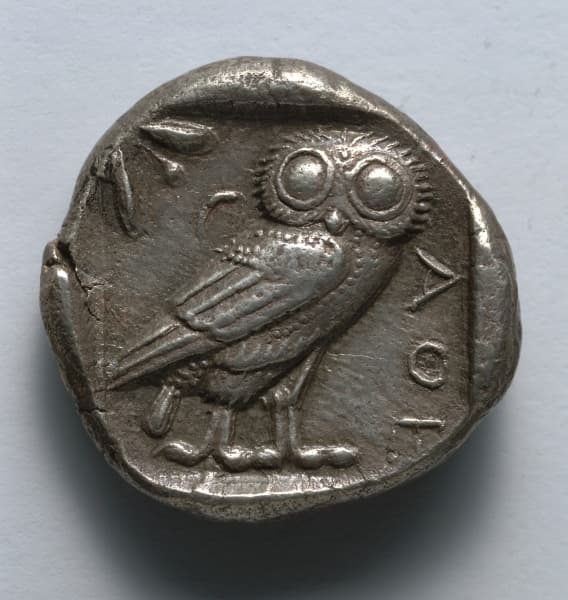
The owl
Owl standing right, head facing; olive sprig and crescent to left; ΑΘΕ to right.
- Metal
- Silver
- Weight
- 17.107 g
- Diameter
- 23 mm
Cleveland Museum of Art, Gift of J. H. Wade, 1916.992. Photographs: CC0.
Changing obverse types
The Wappenmünzen are uninscribed, with changing devices and incuse reverses. Kroll records fourteen obverse types in the didrachm sequence; the Agora sample represents only part of this range. The four entries below identify the types present in that excavation catalogue. Kroll 1993, pp. 5, 16; Kroll 1981.
Athena, owl and ethnic
The owl series retains Athena and ΑΘΕ while changing the eye, helmet ornament, subsidiary devices and treatment of the reverse. Pi-style issues have a helmet ornament resembling Π. The later quadridigité ornament and the silver with symbols are separate developments. Kroll 1993, pp. 8–13; Kroll 2011, pp. 232–234.
Types and issue groups
Type descriptions follow Kroll’s catalogue; the New Style groups follow Thompson’s sequence on pp. 27–29. This is an index to those works, not a complete die corpus. Early monograms require comparison with the printed forms; their shapes are not represented by substitute letters. Third-magistrate, month-letter and die-level combinations are not exhaustively transcribed here.
Search Greek letters or their Latin transliteration. Spaces separate search terms; every term must match. Abbreviated inscriptions remain abbreviated.
162 records
Early silver 6 descriptions
- Obverse
- Bulbous amphora.
- Reverse and distinctions
- Diagonally divided incuse square; no ethnic.
- Obverse
- Horse’s hindquarters right.
- Reverse and distinctions
- Divided incuse square; no ethnic.
- Obverse
- Four-spoked wheel with struts.
- Reverse and distinctions
- Divided incuse square. The wheel occurs on both denominations.
- Obverse
- Bull’s head facing.
- Reverse and distinctions
- Divided incuse square; no ethnic.
- Obverse
- Helmeted Athena right.
- Reverse and distinctions
- Owl standing left, head facing; olive spray; ethnic incompletely preserved on the Agora specimen.
- Obverse
- Helmeted Athena right.
- Reverse and distinctions
- Owl standing right, head facing; olive spray; ΑΘΕ.
Classical silver 6 descriptions
- Obverse
- Athena right; Attic helmet with palmette and olive leaves.
- Reverse and distinctions
- Owl right, head facing; olive spray and crescent; ΑΘΕ.
- Obverse
- Athena right in ornamented Attic helmet.
- Reverse and distinctions
- Owl right, head facing; olive spray; ΑΘΕ. The fifth-century drachm lacks the tetradrachm’s crescent.
- Obverse
- Athena right.
- Reverse and distinctions
- Facing owl between olive branches. Letters of the ethnic occur in different arrangements.
- Obverse
- Athena right.
- Reverse and distinctions
- Two owls facing outward, heads facing; olive spray between. Kroll discusses diobol versus trihemiobol attribution; do not assign a value from the two owls alone.
- Obverse
- Athena right.
- Reverse and distinctions
- Owl right, head facing; olive spray; ΑΘΕ.
- Obverse
- Athena right.
- Reverse and distinctions
- Owl right, head facing; olive spray. Some worn Agora specimens cannot securely be separated from fourth-century examples.
Later silver 10 descriptions
- Obverse
- Athena right with the eye drawn in profile.
- Reverse and distinctions
- Traditional owl, olive spray, crescent and ΑΘΕ. Helmet ornament distinguishes phases within this broad group.
- Obverse
- Athena right, profile eye.
- Reverse and distinctions
- Owl right, head facing; olive spray and crescent; ΑΘΕ.
- Obverse
- Athena right.
- Reverse and distinctions
- Facing owl between branches bearing five or more leaves; varying positions of Α, Θ and Ε.
- Obverse
- Athena right.
- Reverse and distinctions
- Double-bodied owl with one facing head; olive sprays in upper corners; ethnic in different arrangements.
- Obverse
- Athena right.
- Reverse and distinctions
- Three crescents with horns directed inward, arranged around the letters of the ethnic.
- Obverse
- Athena right; four-fingered helmet ornament.
- Reverse and distinctions
- Owl right, head facing; olive spray, crescent and ΑΘΕ.
- Obverse
- Athena right in Corinthian helmet.
- Reverse and distinctions
- Owl turned three-quarters right, head facing, lifting its wings; field symbol; letters of ΑΘΕ.
- Obverse
- Athena right in Attic helmet.
- Reverse and distinctions
- Two owls facing outward, heads facing; letters of ΑΘΕ; some later issues have an additional symbol.
- Obverse
- Athena right in Attic helmet.
- Reverse and distinctions
- Traditional owl, spray, crescent and ΑΘΕ. The Agora example’s status as an imitation is left open.
- Obverse
- Athena right; modified late Old Style ornament.
- Reverse and distinctions
- Owl right, head facing, with an added control symbol. On the Agora specimen the symbol is illegible.
New Style specimens 3 descriptions
- Obverse
- Athena Parthenos right in decorated Attic helmet.
- Reverse and distinctions
- Owl on amphora in wreath; ΤΙΜΑΡΧΟΥ / ΝΙΚΑΓΟ group; third name ΝΙΚΙΑΡΧΕ; Η on amphora; anchor. Kroll dates this specimen to 134/3 BC.
- Obverse
- Athena Parthenos right.
- Reverse and distinctions
- ΗΡΑΚΛΕΙΔΗΣ / ΕΥΚΛΗΣ group, third reading [Τ]ΙΜΑ[Ρ]; Tyche voting; amphora letter illegible. Kroll dates the specimen to 105/4 BC.
- Obverse
- Athena Parthenos right.
- Reverse and distinctions
- ΔΩΣΙΘΕΟΣ / ΧΑΡΙΑΣ group; third reading Σ[Ο]Λ; Tyche holding staff; Θ on amphora; ΣΟ below. Kroll dates the specimen to 100/99 BC.
Bronze 26 descriptions
- Obverse
- Triptolemos in a winged, serpent-drawn chariot.
- Reverse and distinctions
- Piglet on mystic staff; ΕΛΕΥΣΙ; symbols include pig’s head with ivy leaf, ivy branch, boukranion, shell, ram’s head, dolphin and astragal; also letter controls.
- Obverse
- Triptolemos in winged chariot.
- Reverse and distinctions
- Piglet on mystic staff with ΑΘΕ. No. 39 has a plemochoe below; no. 40 places the ethnic below the piglet.
- Obverse
- Athena right in Attic helmet.
- Reverse and distinctions
- Double-bodied owl on mystic staff, sprays above; letters of ΑΘΕ in variable order.
- Obverse
- Athena right in Attic helmet.
- Reverse and distinctions
- Double-bodied owl without a symbol below; sprays above; ethnic variants.
- Obverse
- Athena right in Attic helmet.
- Reverse and distinctions
- Double-bodied owl with Eleusis ring below; sprays above; ethnic variants.
- Obverse
- Athena right in Attic helmet.
- Reverse and distinctions
- Two owls with facing heads and Eleusis ring between; ΑΘΕ below; olive wreath.
- Obverse
- Athena right in Attic helmet.
- Reverse and distinctions
- Two owls with ΑΘ between and plemochoe below; olive wreath.
- Obverse
- Athena right in Attic helmet.
- Reverse and distinctions
- Two owls within olive wreath; ΑΘ between, with variations in letter arrangement.
- Obverse
- Demeter right in wheat wreath.
- Reverse and distinctions
- Piglet standing right; ΑΘΕ above.
- Obverse
- Laureate Apollo right.
- Reverse and distinctions
- Owl standing right, lyre to right; letters of ΑΘΕ.
- Obverse
- Zeus right, wearing fillet.
- Reverse and distinctions
- Athena striding right with thunderbolt and shield; helmet and horse’s head in fields; ethnic.
- Obverse
- Zeus right, wearing fillet.
- Reverse and distinctions
- Athena with thunderbolt and shield; wheat ear and snake in fields; ethnic.
- Obverse
- Athena right in Corinthian helmet.
- Reverse and distinctions
- Zeus hurling thunderbolt; pileus to left and eagle to right; ethnic.
- Obverse
- Athena right in Corinthian helmet.
- Reverse and distinctions
- Zeus hurling thunderbolt; plemochoe to left, cornucopia and eagle to right; ethnic.
- Obverse
- Athena right in Corinthian helmet.
- Reverse and distinctions
- Zeus hurling thunderbolt; amphora to left, cornucopia and eagle to right; ethnic.
- Obverse
- Athena right in Corinthian helmet.
- Reverse and distinctions
- Zeus hurling thunderbolt; amphora to left and eagle to right, without cornucopia; ethnic.
- Obverse
- Athena right in Corinthian helmet.
- Reverse and distinctions
- Zeus hurling thunderbolt between two caps of the Dioscuri; ethnic. Kroll associates the device with the Demetrios–Agathippos silver.
- Obverse
- Athena right in Corinthian helmet.
- Reverse and distinctions
- Zeus hurling thunderbolt; mystic staff to left; ethnic.
- Obverse
- Athena right in Corinthian helmet.
- Reverse and distinctions
- Zeus hurling thunderbolt; thyrsos to left; ethnic.
- Obverse
- Athena right in Corinthian helmet.
- Reverse and distinctions
- Zeus hurling thunderbolt; star between crescents to right; ethnic. Kroll dates the issue to 87/6 BC.
- Obverse
- Athena right in Corinthian helmet.
- Reverse and distinctions
- Amphora crossed by a palm branch; ethnic.
- Obverse
- Athena right in Attic helmet.
- Reverse and distinctions
- Two owls standing outward on a thunderbolt, heads facing; ΑΘΕ below; olive wreath.
- Obverse
- Cicada.
- Reverse and distinctions
- Owl right, head facing, on thunderbolt; ethnic.
- Obverse
- Laureate Apollo right.
- Reverse and distinctions
- Amphora with transverse palm branch; ethnic divided across the two faces.
- Obverse
- Laureate Apollo right.
- Reverse and distinctions
- Plemochoe within wheat wreath; ethnic.
- Obverse
- Artemis right, quiver at shoulder.
- Reverse and distinctions
- Plemochoe within wreath; ethnic. Kroll relates its distribution to use on Delos.
New Style magistrates and symbols
The three divisions below are Thompson’s “Early”, “Middle” and “Late” groups. Their order locates entries in the corpus; it is not a revised annual chronology. The edition’s original dates have therefore been omitted. Greek text retains the issue-heading abbreviations, with ordinary letterforms normalized; a slash separates alternative officials in the same group. Thompson 1961, pp. 27–30; chronological revisions: Kroll 1993, pp. 13–15.
New Style · Early 28 issue groups
New Style · Middle 38 issue groups
| Magistrate inscription | Symbol | Catalogue |
|---|---|---|
| ΗΡΑ — ΑΡΙΣΤΟΦEra — Aristoph | Club, lion skin and bow in case | Thompson p. 133 |
| ΜΕΝΕΔ — ΕΠΙΓΕΝΟMened — Epigeno | Asklepios | Thompson p. 138 |
| ΤΙΜΑΡΧΟΥ — ΝΙΚΑΓΟTimarchoy — Nikago | Anchor and star | Thompson p. 143 |
| ΠΟΛΥΧΑΡΜ — ΝΙΚΟΓPolycharm — Nikog | Winged caduceus | Thompson p. 148 |
| ΔΩΡΟΘΕ — ΔΙΟΦDorothe — Dioph | Lion forepart | Thompson p. 151 |
| ΑΝΤΙΟΧΟΣ — ΝΙΚΟΓ / ΚΑΡΑΙΧΟΣAntiochos — Nikog / Karaichos | Elephant | Thompson p. 155 |
| ΘΕΟΦΡΑ — ΣΩΤΑΣTheophra — Sotas | Winged thunderbolt | Thompson p. 160 |
| ΔΙΟΓΕ — ΠΟΣΕΙDioge — Posei | Dionysos | Thompson p. 163 |
| ΑΧΑΙΟΣ — ΗΛΙAchaios — Eli | Cornucopia with grain | Thompson p. 166 |
| ΛΥΣΑΝ — ΓΛΑΥΚΟΣLysan — Glaykos | Cicada | Thompson p. 170 |
| ΕΠΙΓΕΝΗ — ΣΩΣΑΝΔΡΟΣEpigene — Sosandros | Eagle on thunderbolt | Thompson p. 173 |
| ΠΟΛΕΜΩΝ — ΑΛΚΕΤΗΣPolemon — Alketes | Tripod | Thompson p. 181 |
| ΜΙΚΙΩΝ — ΕΥΡΥΚΛΕΙMikion — Eyryklei | Dioscuri | Thompson p. 187 |
| ΑΦΡΟΔΙΣΙ — ΑΠΟΛΗΞΙAphrodisi — Apolexi | Nike | Thompson p. 193 |
| ΕΥΡΥΚΛΕΙ — ΑΡΙΑΡΑEyryklei — Ariara | Three Graces | Thompson p. 196 |
| ΚΑΡΑΙΧ — ΕΡΓΟΚΛΕKaraich — Ergokle | Prow | Thompson p. 200 |
| ΑΦΡΟΔΙΣΙ — ΔΙΟΓΕAphrodisi — Dioge | Double cornucopia with fillet | Thompson p. 205 |
| ΔΙΟΝΥΣΙ — ΔΙΟΝΥΣΙDionysi — Dionysi | Helios in quadriga | Thompson p. 209 |
| ΑΜΜΩΝΙΟΣ — ΚΑΛΛΙΑΣAmmonios — Kallias | Two torches | Thompson p. 216 |
| ΘΕΜΙΣΤΟ — ΘΕΟΠΟΜΠΟΣThemisto — Theopompos | Trophy on prow | Thompson p. 221 |
| ΣΩΚΡΑΤΗΣ — ΔΙΟΝΥΣΟΔΩSokrates — Dionysodo | Apollo Delios | Thompson p. 226 |
| ΜΗΤΡΟΔΩΡΟΣ — ΜΙΛΤΙΑΔΗΣ / ΔΗΜΟΣΘΕΝMetrodoros — Miltiades / Demosthen | Grapes | Thompson p. 232 |
| ΔΙΟΤΙΜΟΣ — ΜΑΓΑΣDiotimos — Magas | No symbol | Thompson p. 237 |
| ΕΥΜΑΡΕΙΔΗΣ — ΑΛΚΙΔΑΜ / ΚΛΕΟΜΕΝEymareides — Alkidam / Kleomen | Triptolemos | Thompson p. 242 |
| ΧΑΡΙΝΑΥΤΗΣ — ΑΡΙΣΤΕΑΣCharinaytes — Aristeas | Demeter (?) with torches | Thompson p. 246 |
| ΦΑΝΟΚΛΗΣ — ΑΠΟΛΛΩΝΙΟΣPhanokles — Apollonios | Artemis with torch | Thompson p. 252 |
| ΕΥΒΟΥΛΙΔΗΣ — ΑΓΑΘΟΚΛΗEyboylides — Agathokle | Artemis with fawn | Thompson p. 257 |
| ΖΩΙΛΟΣ — ΕΥΑΝΔΡΟΣZoilos — Eyandros | Bee | Thompson p. 257 |
| ΔΑΜΩΝ — ΣΩΣΙΚΡΑΤΗΣDamon — Sosikrates | Quiver and bow | Thompson p. 262 |
| ΕΥΜΗΛΟΣ — ΚΑΛΛΙΦΩΝEymelos — Kalliphon | Tyche | Thompson p. 267 |
| ΗΡΑΚΛΕΙΔΗΣ — ΕΥΚΛΗΣErakleides — Eykles | Winged Tyche with amphora (first group) | Thompson p. 271 |
| ΘΕΟΔΟΤΟΣ — ΚΛΕΟΦΑΝΗΣTheodotos — Kleophanes | No symbol | Thompson p. 275 |
| ΗΡΑΚΛΕΙΔΗΣ — ΕΥΚΛΗΣErakleides — Eykles | Winged Tyche with amphora (second group) | Thompson p. 282 |
| ΑΝΔΡΕΑΣ — ΧΑΡΙΝΑΥΤΗΣAndreas — Charinaytes | Dionysos and Demeter (?) | Thompson p. 287 |
| ΙΚΕΣΙΟΣ — ΑΣΚΛΗΠΙΑΔΗΣIkesios — Asklepiades | Wreath | Thompson p. 290 |
| ΤΙΜΟΣΤΡΑΤΟΣ — ΠΟΣΗΣTimostratos — Poses | Dionysos with mask | Thompson p. 292 |
| ΑΜΦΙΚΡΑΤΗΣ — ΕΠΙΣΤΡΑΤΟΣAmphikrates — Epistratos | Grain ears | Thompson p. 296 |
| ΔΩΣΙΘΕΟΣ — ΧΑΡΙΑΣDositheos — Charias | Tyche | Thompson p. 300 |
New Style · Late 45 issue groups
| Magistrate inscription | Symbol | Catalogue |
|---|---|---|
| ΔΗΜΗΤΡΙΟΣ — ΑΓΑΘΙΠΠΟΣDemetrios — Agathippos | Caps of the Dioscuri | Thompson p. 320 |
| ΝΙΚΗΤΗΣ — ΔΙΟΝΥΣΙΟΣNiketes — Dionysios | Gorgon head | Thompson p. 329 |
| ΑΡΙΣΤΙΩΝ — ΦΙΛΩΝAristion — Philon | Pegasus | Thompson p. 335 |
| ΑΡΟΠΟΣ — ΜΝΑΣΑΓΟAropos — Mnasago | Winged Agon | Thompson p. 340 |
| ΞΕΝΟΚΛΗΣ — ΑΡΜΟΞΕΝΟΣXenokles — Armoxenos | Coiled serpent | Thompson p. 344 |
| ΝΙΚΟΓΕΝΗΣ — ΚΑΛΛΙΜΑΧΟΣNikogenes — Kallimachos | Hermes or no symbol | Thompson p. 347 |
| ΔΗΜΕΑΣ — ΕΡΜΟΚΛΗΣDemeas — Ermokles | Headdress of Isis | Thompson p. 350 |
| ΞΕΝΟΚΛΗΣ — ΑΡΜΟΞΕΝΟΣXenokles — Armoxenos | Dolphin and trident | Thompson p. 354 |
| ΞΕΝΟΚΛΗΣ — ΑΡΜΟΞΕΝΟΣXenokles — Armoxenos | Roma | Thompson p. 359 |
| ΚΟΙΝΤΟΣ — ΚΛΕΑΣKointos — Kleas | Roma and Nike | Thompson p. 362 |
| ΑΠΕΛΛΙΚΩΝ — ΓΟΡΓΙΑΣApellikon — Gorgias | Griffin | Thompson p. 364 |
| ΒΑΣΙΛΕ ΜΙΘΡΑΔΑΤΗΣ — ΑΡΙΣΤΙΩΝBasile Mithradates — Aristion | Star between crescentsMithradates and Aristion: 87/6 BC in Kroll 1993, p. 14. Its position here follows the corpus, not the revised chronology. Source | Thompson p. 368 |
| ΜΝΑΣΕΑΣ — ΝΕΣΤΩΡMnaseas — Nestor | Kerchnos | Thompson p. 369 |
| ΚΛΕΟΦΑΝΗΣ — ΕΠΙΘΕΤΗΣKleophanes — Epithetes | Baitulos with fillet | Thompson p. 370 |
| ΜΕΝΤΩΡ — ΜΟΣΧΙΩΝMentor — Moschion | Harmodios and Aristogeiton | Thompson p. 371 |
| ΑΡΧΙΤΙΜΟΣ — ΔΗΜΗΤΡΙArchitimos — Demetri | Isis | Thompson p. 372 |
| ΛΥΣΑΝΔΡΟΣ — ΟΙΝΟΦΙΛΟΣLysandros — Oinophilos | Poppy head and grain ears | Thompson p. 374 |
| ΑΜΦΙΑΣ — ΟΙΝΟΦΙΛΟΣAmphias — Oinophilos | Demeter | Thompson p. 375 |
| ΕΥΜΗΛΟΣ — ΘΕΟΞΕΝΙΔΗΣEymelos — Theoxenides | Ares (?) | Thompson p. 376 |
| ΝΕΣΤΩΡ — ΜΝΑΣΕΑΣNestor — Mnaseas | Stag | Thompson p. 377 |
| ΣΩΤΑΔΗΣ — ΘΕΜΙΣΤΟΚΛΗΣSotades — Themistokles | Bakchos | Thompson p. 379 |
| ΛΕΥΚΙΟΣ — ΑΝΤΙΚΡΑΤΗΣLeykios — Antikrates | Demeter and Artemis | Thompson p. 380 |
| ΠΑΝΤΑΚΛΗΣ — ΔΗΜΗΤΡΙΟΣPantakles — Demetrios | Herakles | Thompson p. 380 |
| ΘΕΟΦΡΑΣΤΟΣ — ΘΕΜΙΣΤΟTheophrastos — Themisto | Looped fillet | Thompson p. 381 |
| ΔΙΟΦΑΝΤΟΣ — ΑΙΣΧΙΝΗΣDiophantos — Aischines | Sphinx | Thompson p. 381 |
| ΔΗΜΕΑΣ — ΚΑΛΛΙΚΡΑΤΙΔΗΣDemeas — Kallikratides | Isis | Thompson p. 382 |
| ΑΛΚΕΤΗΣ — ΕΥΑΓΙΩΝAlketes — Eyagion | Helmet | Thompson p. 382 |
| ΔΙΟΝΥΣΙΟΣ — ΜΝΑΣΑΓΟΡΑΣDionysios — Mnasagoras | Dionysos | Thompson p. 383 |
| ΕΠΙΓΕΝΗΣ — ΞΕΝΩΝEpigenes — Xenon | Apollo Lykeios | Thompson p. 383 |
| ΜΕΝΕΔΗΜΟΣ — ΤΙΜΟΚΡΑΤΗΣMenedemos — Timokrates | Demeter | Thompson p. 384 |
| ΜΕΝΝΕΑΣ — ΗΡΩΔΗΣMenneas — Erodes | Hekate | Thompson p. 385 |
| ΔΙΟΝΥΣΙΟΣ — ΔΗΜΟΣΤΡΑΤΟΣDionysios — Demostratos | Winged caduceus | Thompson p. 385 |
| ΔΗΜΟΧΑΡΗΣ — ΠΑΜΜΕΝΗΣDemochares — Pammenes | Cicada | Thompson p. 386 |
| ΔΙΟΚΛΗΣ — ΛΕΩΝΙΔΗΣDiokles — Leonides | Asklepios | Thompson p. 386 |
| ΦΙΛΟΚΡΑΤΗΣ — ΗΡΩΔΗΣPhilokrates — Erodes | Dionysos | Thompson p. 387 |
| ΚΑΛΛΙΜΑΧΟΣ — ΕΠΙΚΡΑΤΗΣKallimachos — Epikrates | Triptolemos | Thompson p. 387 |
| ΑΡΧΙΤΙΜΟΣ — ΠΑΜΜΕΝΗΣArchitimos — Pammenes | Filleted thyrsos | Thompson p. 388 |
| ΔΙΟΚΛΗΣ ΤΟ ΔΕΥ — ΜΗΔΕΙΟΣDiokles To Dey — Medeios | Hygieia | Thompson p. 388 |
| ΑΠΕΛΛΙΚΩΝ — ΑΡΙΣΤΟΤΕΛΗΣApellikon — Aristoteles | Demeter | Thompson p. 389 |
| ΗΡΑΚΛΩΝ — ΗΡΑΚΛΕΙΔΗΣEraklon — Erakleides | Eagle head | Thompson p. 389 |
| ΦΙΛΟΚΡΑΤΗΣ — ΚΑΛΛΙΦΩΝPhilokrates — Kalliphon | Nike | Thompson p. 390 |
| ΤΡΥΦΩΝ — ΠΟΛΥΧΑΡΜΟΣTryphon — Polycharmos | Hekate | Thompson p. 390 |
| ΤΟ ΤΡΙ ΔΙΟΚΛΗΣ — ΔΙΟΔΩΡΟΣTo Tri Diokles — Diodoros | Dionysos | Thompson p. 390 |
| ΔΙΟΚΛΗΣ ΜΕΛΙ — ΜΗΔΕΙΟΣDiokles Meli — Medeios | Athena Parthenos | Thompson p. 391 |
| ΑΠΟΛΗΞΙΣ — ΛΥΣΑΝΔΡΟΣApolexis — Lysandros | Artemis | Thompson p. 391 |
Names, month letters and controls
Magistrate names
Two principal officials appear as names or monograms. A third, shorter-term name occurs during part of the series. These are separate fields in a specimen record: a match for the principal pair does not establish the complete variety. Kroll 1993, p. 14.
Letters on the amphora
These designate months of the Athenian civil calendar. Thompson records interruptions in their early use; hemidrachms omit them, and some drachms do too. A missing or unreadable letter should remain unrecorded. Thompson 1961, pp. 608–613.
Control combinations
Combinations normally lie below the amphora or in the left field; early exceptions place them on the amphora. Their administrative meaning is debated. Kroll describes a possible association with bullion sources, rather than an established expansion of each abbreviation. Thompson 1961, pp. 613–622; Kroll 1993, p. 14.
Catalogue notation
In Thompson, an Arabic number identifies an obverse die; letters distinguish its associated reverse dies. Thus a reference such as 348a is more precise than the magistrate pair alone. Her catalogue records third magistrate, month and control in that order. Thompson 1961, p. 30.
29 control families in Thompson’s inventory
- ΑΝ
- ΑΠ, ΑΠΟ
- ΑΡ
- ΒΙ, ΒΙΑ
- ΓΛ
- ΔΑ
- ΔΗ
- ΔΙ, ΔΙΟ
- ΕΜ, ΕΜΦ
- ΕΠ, ΕΠΙ
- ΕΡ
- ΕΥ
- ΖΩ
- ΗΡ, ΗΡΑ
- ΘΥ
- ΙΣ, ΙΣΙ
- ΚΕ
- ΚΤ, ΚΤΗ
- ΜΕ, ΜΕΝ, ΜΕΝΕ
- ΜΗ
- ΜΟ
- ΠΕ, ΠΕΡ
- ΠΡ, ΠΡΟ, ΠΡΩ
- ΣΟ, ΣΟΛ
- ΣΤ, ΣΤΕ
- ΣΦ, ΣΦΑ, ΣΦΑΙ
- ΣΩ
- ΤΙ, ΤΙΓ
- ΦΙ
Variants are grouped as on p. 613. Thompson regards the isolated ΠΡΩ as probably an error for ΠΡΟ and discusses erroneous forms related to ΕΜΦ in n. 3. These are control readings, not expanded personal names. Thompson 1961, p. 613 and nn. 3–4.
One magistrate pair, several reverse varieties
For the Asklepios issue ΜΕΝΕΔ — ΕΠΙΓΕΝΟ, Thompson records nine reverse dies under obverse die 348. The third-magistrate readings and amphora letters change through the group; different controls also occur within a single month. Entries a and d have the same recorded fields but are separate reverse dies.
| Reference | Third official | Month | Control |
|---|---|---|---|
| 348a | ΘΕΟΦΡ | Α | ΑΠ |
| 348b | ΘΕΟΦΡ | Α | ΗΡ |
| 348c | ΘΕΟΦΡ | Α | ΣΩ |
| 348d | ΘΕΟΦΡ | Α | ΑΠ |
| 348e | ΔΙΟΔ | Β | ΣΩ |
| 348f | ΔΙΟΔ | Β | ΓΛ |
| 348g | ΔΙΟΔ | Β | ΗΡ |
| 348h | ΔΙΟΔΟ | Β | ΣΩ |
| 348i | ΦΙΛΟΘ | Γ | ΣΩ |
Thompson 1961, p. 138, nos. 348a–i. Names and controls alone do not distinguish every die.
Hoards and find evidence
The following examples document hoard composition, proposed burial dates and evidence for minting technique.
Hoard contents and excavation finds describe different samples. Kroll records 129 Athenian silver coins and imitations among nearly 14,000 Athenian coins from the Agora: less than one per cent of that excavated assemblage. These counts concern recovered material, not the proportions originally minted. Kroll 1993, pp. 1–5.
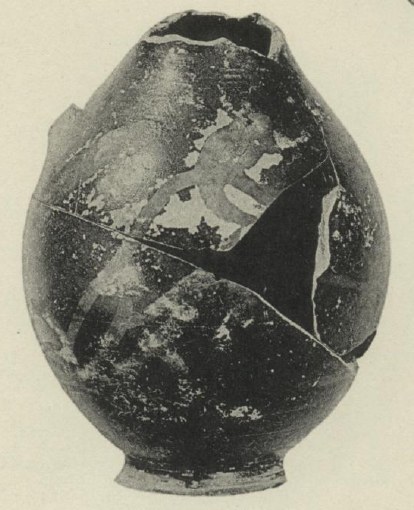
Thompson 1957, p. 1 n. 1, pl. IV (detail) · © American Numismatic Society.
The Piraeus hoard of 1956
The hoard was discovered during the excavation of house foundations in Piraeus in 1956. It comprised 89 Athenian silver coins in a miniature vase closed with a lead stopper. The American Numismatic Society acquired the group; Margaret Thompson published it in 1957.6
The deposit contained 64 triobols, or half-drachms, two drachms and 23 smaller fractions. Thompson used relative wear, die links and the form of the helmet ornament to assess the chronological relationships among the coins.6
Thompson proposed a burial date of c. 315–295 BC, based on the container and comparisons with other coinages. The identity of the owner and the purpose of the deposit are unknown.6
Triobols: 64 of 89 coins (71.9%).
| Denomination | Coins | Value (obols) |
|---|---|---|
| Drachms | 2 | 12 |
| Triobols | 64 | 192 |
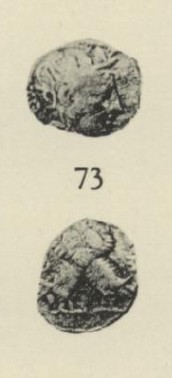
| Diobols | 7 | 14 |
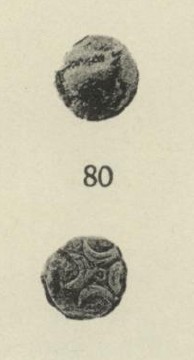
| Obols | 7 | 7 |
| Tritartemoria | 7 | 5¼ |
| Hemiobols | 2 | 1 |
| Total | 89 | 231¼ |
Values are calculated from the published denomination identifications: 1 drachm = 6 obols. The total is equivalent to 38 drachms and 3¼ obols.
Counts: Thompson 1957, pp. 1–5Denominations: Kroll 2011, pp. 246–248
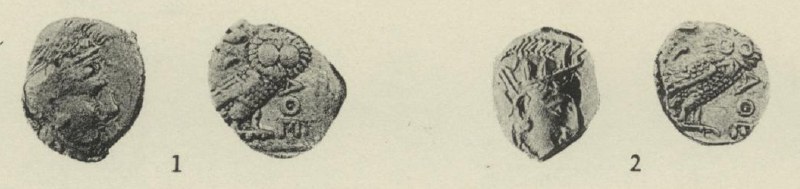
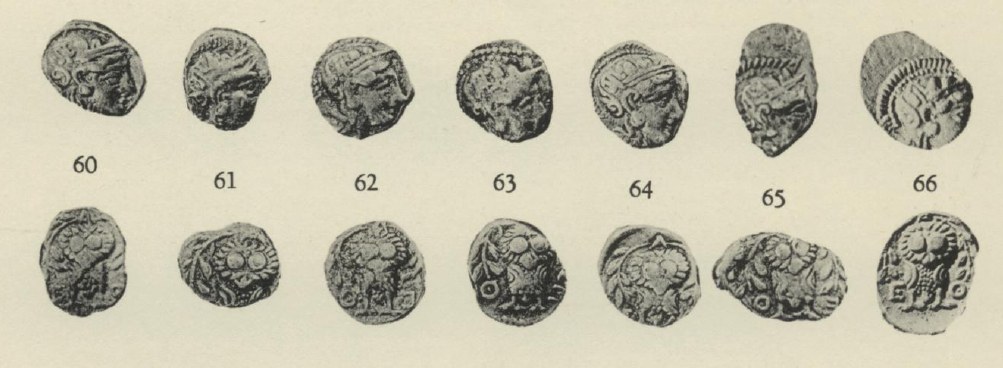
Smaller silver denominations
All four specimens have Athena’s head on the obverse, shown above the reverse. The different reverse types distinguish denominations within the small silver series. Weights are Thompson’s measurements of the individual coins. Images are enlarged independently.
© American Numismatic Society.
© American Numismatic Society.
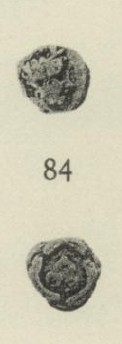
© American Numismatic Society.
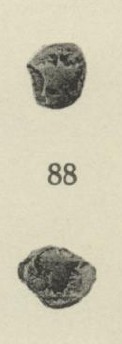
© American Numismatic Society.
Folded flans
Kroll interprets the seams visible on the edges as evidence that earlier coins were flattened, folded and restruck. The photographs show the obverse, reverse and edge of each specimen.7
The two Pi II tetradrachms are from the Near East and Attica/Piraeus hoards cited by Kroll. The Thessaly specimen documents the continued use of folded flans in the third century BC.7
Kroll 2011, figs. 6c–d & 10a ↗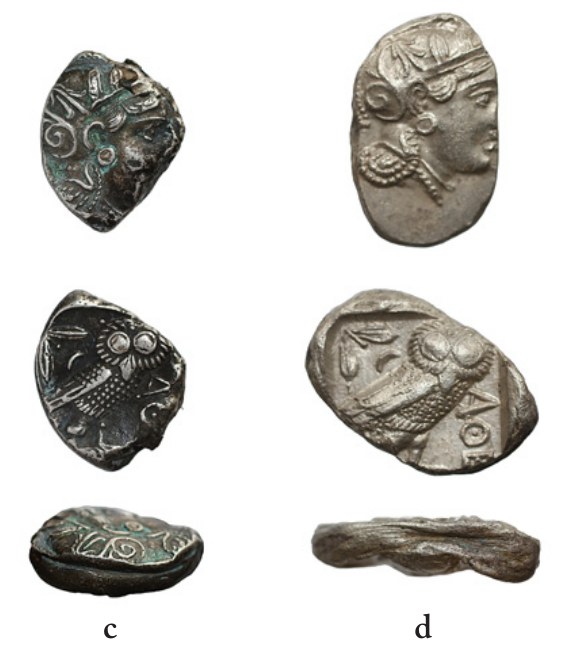
Photos © J. H. Kroll; courtesy ANS.
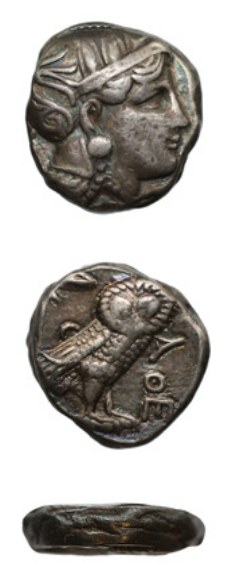
Photos © J. H. Kroll; courtesy ANS.
Illustrations are reproduced at different scales; displayed dimensions do not indicate relative coin diameters.
Selected reference works
BMC Attica, Megaris and Aegina
B. V. Head · BMC Attica · 1888Specimen descriptions and catalogue references for the coinages of Attica, Megaris and Aegina.
Read in libraryTypologyFrom Wappenmünzen to Gorgoneia to Owls
John H. Kroll · 1981An analysis of the Wappenmünzen types and the role of the gorgoneion issues in the transition to owl coinage.
Source referenceChronologyThe Archaic Owls of Athens
Colin M. Kraay · 1956A reassessment of the classification and dating of the early owl series, based on the numismatic evidence and earlier scholarship.
Source referenceWorks on Attica
Dates and attributions in older catalogues may differ from those adopted in later studies.
Browse all 12 references
- Doctrine of Ancient Coins, vol. 4Read in library
- Description of Ancient Greek and Roman Medals, vol. 3 (1824)Read in library
- The Coins of AthensSource reference
- A Numismatic Commentary on PausaniasRead in library
- A Catalogue of the Greek Coins in the British Museum: Attica, Megaris, AeginaRead in library
- Common Greek Coins, Vol. IRead in library
- Treatise on Greek and Roman Coins, Part II (Historical Description), vol. IIIRead in library
- Athens: Its History and Coinage before the Persian InvasionRead in library
- The Archaic Owls of Athens: Classification and ChronologySource reference
- The Celenderis HoardSource reference
- From Wappenmünzen to Gorgoneia to OwlsSource reference
- New Specimens of Athenian Coinage, 480–449 BCSource reference
Sources & image credits
- The Acropolis and the cult of AthenaUNESCO World Heritage Centre
- Athenian silver and the tetradrachmThe Metropolitan Museum of Art
- The illustrated coin: 449–407 BCCleveland Museum of Art, 1916.992
- The leases of the Laureion minesMargaret Crosby, Hesperia 19 (1950), pp. 189–312
- The Greek Coins · Athenian Agora XXVIJohn H. Kroll, with Alan S. Walker (1993). Silver: pp. 4–15; bronze denominations: pp. 37–39.
- A Hoard of Athenian FractionsMargaret Thompson, ANS Museum Notes 7 (1957), pp. 1–11, pls. I–IV. Find and catalogue: pp. 1–5; interpretation and proposed date: pp. 6–11.
- The Reminting of Athenian Silver Coinage, 353 B.C.John H. Kroll, Hesperia 80 (2011), pp. 229–259. Folded flans: pp. 234–245; third-century coins and silver units: pp. 246–248.
- The New Style Silver Coinage of AthensMargaret Thompson, Numismatic Studies 10 (1961). Issue sequence: pp. 27–29; catalogue notation: p. 30; magistrates: pp. 546–599; symbols: pp. 600–607; amphora letters and controls: pp. 608–622. Its original dates are superseded; compare Kroll 1993, pp. 13–15.
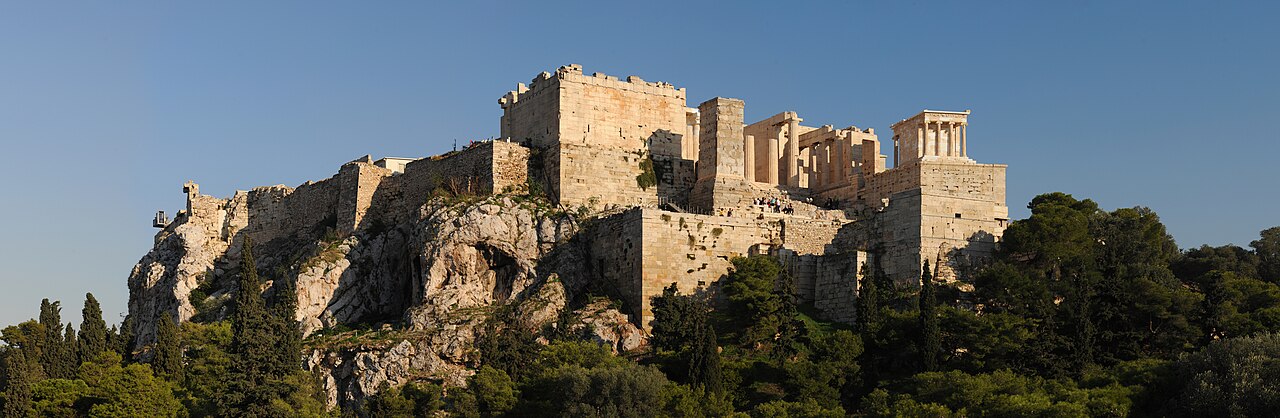
Landscape photograph. Acropolis panoramic view from Areopagus hill, Ggia, 24 October 2010. CC BY-SA 3.0. Wikimedia Commons web rendition; no crop or other alteration.

Coin photographs. Cleveland Museum of Art, Gift of J. H. Wade, 1916.992.a (obverse) and 1916.992.b (reverse). CC0. Museum web renditions, unaltered. Date and measurements follow the museum record; type descriptions may also be compared with Kroll 1993, p. 17, no. 8. The museum’s 449–407 BC dating applies to this specimen; the timeline follows Kroll’s broader chronology.
Piraeus hoard illustrations. Selected figure details from Thompson 1957: the jug from pl. IV; drachms 1–2 from pl. I; triobols 60–66 and diobol 73 from pl. III; obol 80, tritartemorion 84 and hemiobol 88 from pl. IV. © American Numismatic Society. These are excerpts for discussion of the published find; no open licence is claimed. Figure boundaries are selected without retouching the objects.
Hoard coins in colour. Kroll 2011, p. 243, fig. 6c–d, and p. 246, fig. 10a. Photographs © J. H. Kroll; courtesy of the American Numismatic Society. The article’s p. 229 n. 1 provides for noncommercial image reproduction. The relevant coin illustrations are extracted from their page layouts, without retouching.
Athena
Head of Athena right, wearing a crested helmet ornamented with three olive leaves and a palmette.
- Metal
- Silver
- Weight
- 17.107 g
- Diameter
- 23 mm
View the museum record ↗