
A Handbook of Greek and Roman Coins
Chronological coverage: c. 700 BC – AD 297
Rights status: We believe this source work is public domain in the United States (published 1899). Rights may differ outside the United States. Rights & takedown
Hill’s handbook explains how ancient coins were made, described, classified, and interpreted. It covers metals, fabric, weight, denominations, dies, types, inscriptions, countermarks, forgeries, chronology, and collecting practice, with fifteen plates. Researchers can use it to decode older catalogue terminology, understand the evidence available for attribution, and see how late nineteenth-century scholars balanced art history, epigraphy, metrology, and historical interpretation.
Because the work predates much of the modern archaeological, die-study, epigraphic, and provenance evidence, verify dates, mint or ruler assignments, legend readings, authenticity, and current specimen locations against current corpora and databases.
Cite this work
George Francis Hill (1899) A Handbook of Greek and Roman Coins. Numophylacium Graecum, https://numophylacium.com/works/hill-handbook-greek-roman-coins/
Research guides citing this work
- Macedonia and Alexander A guide to BMC Macedonia, AMNG Macedonia and Paeonia, Newell's Demetrius, and related references for Macedonian royal, tribal, civic, and Alexander-type coinage.
- Weights and Standards A guide to Hultsch, Head, Macdonald, Babelon, and catalogue evidence for Attic, Aeginetan, Euboic, Phoenician, and local Greek weight standards.
Related works
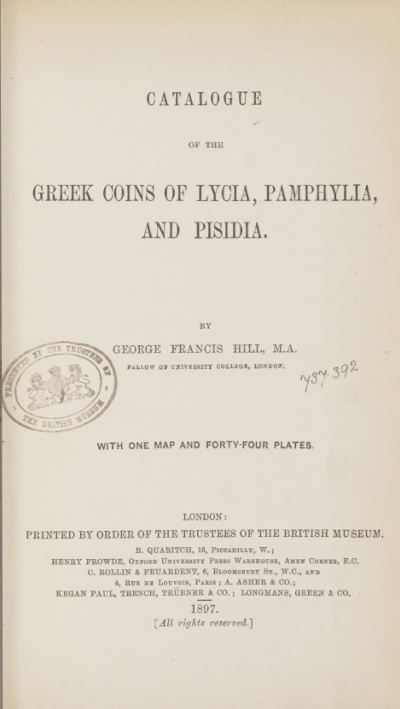
- A Catalogue of the Greek Coins in the British Museum: Lycia, Pamphylia, and Pisidia George Francis Hill, 1897
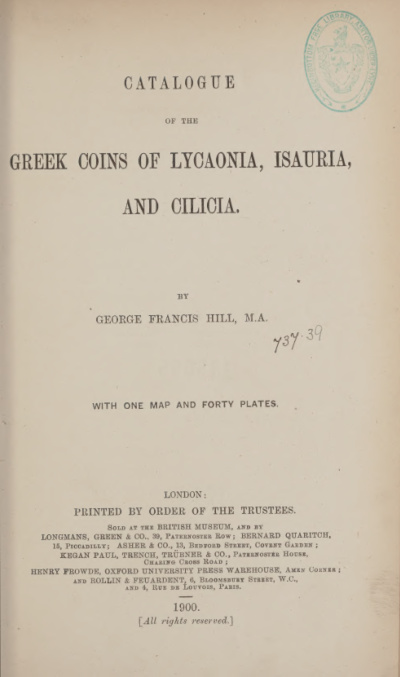
- A Catalogue of the Greek Coins in the British Museum: Lycaonia, Isauria, and Cilicia George Francis Hill, 1900
- Coins of Ancient Sicily George Francis Hill, 1903
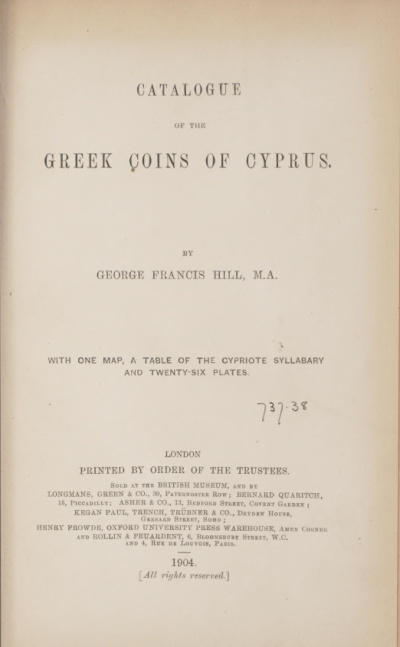
- A Catalogue of the Greek Coins in the British Museum: Cyprus George Francis Hill, 1904
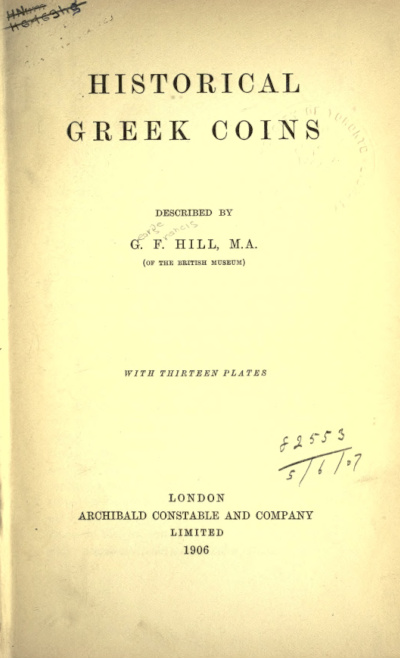
- Historical Greek Coins George Francis Hill, 1906
- Historical Greek Coins George Francis Hill, 1906


Public domain — published 1899.